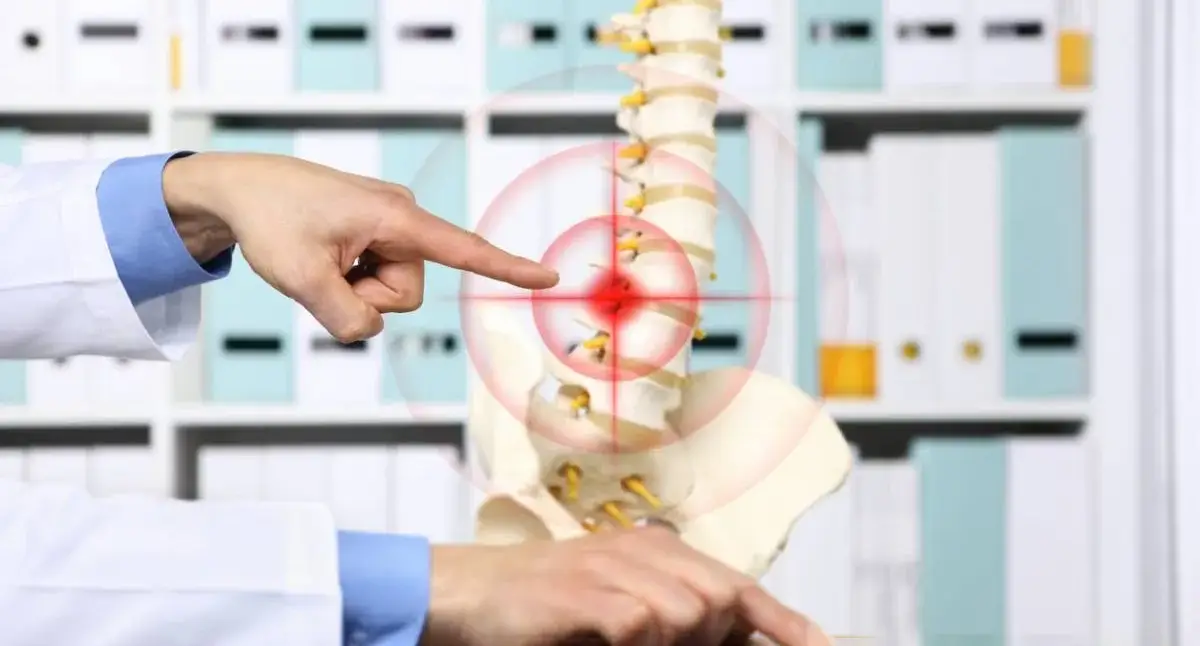



Spinal discs have limited ability to “self-repair,” but with an accurate diagnosis and stepwise treatment, many patients can reduce pain, improve function, and avoid or delay surgery.





You bend to load groceries, sit through a long drive, or twist to grab something from the back seat—and your back “catches.” Maybe it fades after a few days, then returns the next time you lift, sneeze, or sit too long. When pain keeps cycling like that, it’s normal to wonder if an injured disc can heal on its own or if you are headed toward surgery. If you are searching for the best minimally invasive spine surgeon in Los Angeles, here is the medically honest answer: spinal discs have limited self-repair ability, but many disc-related symptoms can improve significantly with the right diagnosis and a targeted plan.
Intervertebral discs sit between the vertebrae and act like shock absorbers. Each disc has a softer center (nucleus) surrounded by a tougher outer ring (annulus). Daily life—bending, lifting, sports, prolonged sitting, even normal aging—puts discs under repeated load.
Disc problems are often described in a few common ways:
Not every disc change on an MRI causes symptoms. What matters is whether the disc findings match your pain pattern, nerve symptoms, and exam.
Many tissues heal well because they have strong blood supply. Spinal discs, however, have a limited direct blood supply, especially in adulthood. That reduced circulation limits how efficiently the body can deliver oxygen and nutrients needed for structural repair.
As a result, a disc that has significantly degenerated usually does not return to its original form. But “not fully repairing” is not the same as “never getting better.” Symptoms can improve when inflammation settles, surrounding muscles are strengthened, movement patterns change, and irritated nerves recover over time.
In practical terms, many people feel and function better even if an MRI still shows disc wear.
Disc-related pain can be straightforward or surprisingly confusing. Some people feel a deep, aching pain in the low back or neck. Others mostly notice nerve symptoms that travel into an arm or leg.
Symptoms that can fit with disc injury or degenerative disc disease include:
Disc degeneration can also contribute to narrowing around nerves over time. If your symptoms include leg heaviness or cramping with walking that improves when you sit or lean forward, your evaluation may also consider spinal stenosis.
Age-related wear plays a role, but many patients develop symptoms earlier because of how their spine is loaded day-to-day—or from a single injury that changes the disc’s structure.
Factors that can contribute include:
When disc wear overlaps with arthritic changes, treatment often addresses the full picture. Related resources include osteoarthritis treatment and bone spur treatment.
“Degenerative disc disease” is a description, not a one-size-fits-all diagnosis. A high-quality evaluation focuses on identifying the true pain generator and whether nerves are involved.
A typical workup includes:
When nerve symptoms are present, the timing and progression matter. New weakness or worsening function can change how quickly treatment should move forward.
For a focused overview of conservative and advanced options, see our page on degenerative disc disease treatment.
Even though discs have limited regenerative capacity, many patients do well with non-surgical care aimed at reducing inflammation, restoring movement, and improving strength and load tolerance.
Common non-surgical options include:
One common reason people feel stuck is relying on rest alone. Rest may lower symptoms temporarily, but it does not rebuild the support system that helps keep pain from recurring.
Surgery is not the first step for most disc injuries or degenerative disc disease. It may be discussed when a thoughtful conservative plan has been tried and symptoms remain limiting—or when there are neurologic concerns that should not wait.
Surgical evaluation may be appropriate when:
For the right candidates, minimally invasive spine surgery may reduce tissue disruption compared to traditional open approaches. Treatment recommendations depend on the specific disc level involved, stability of the spine, and whether nerve compression is present.
You can explore the full range of options on our spine surgery page.
Ongoing disc pain can quietly reshape your life—shorter walks, fewer workouts, hesitation before lifting, and constant second-guessing of everyday movements. At Yashar Neurosurgery, Parham Yashar, MD takes a patient-centered approach to disc injury and degenerative disc disease: careful listening, a thorough exam, detailed imaging review, and a stepwise plan that starts with non-surgical options when appropriate and escalates only when the diagnosis supports it.
If you want a clear explanation of what is driving your back or neck symptoms and what your realistic options are, schedule an evaluation with Yashar Neurosurgery in Los Angeles at (424) 209-2669.




Please complete and submit the form below and a member of our staff will contact you shortly.