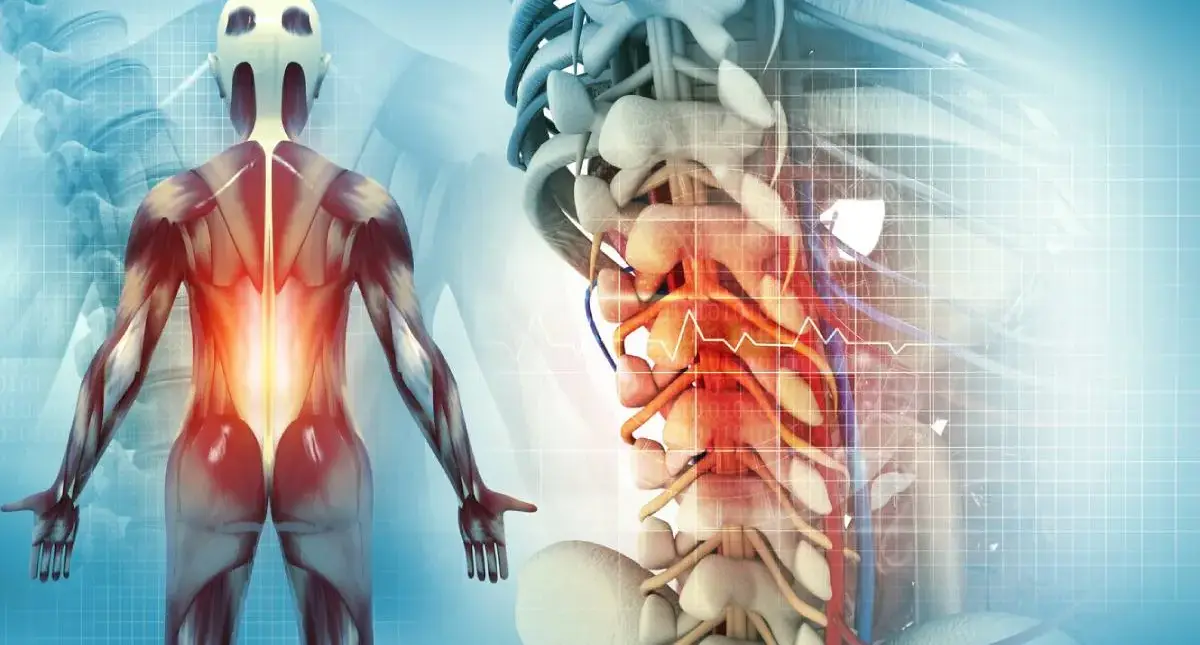





You may not think twice about your back until a normal day starts coming with rules: no long car rides, no sitting through a movie, no lifting the grocery bag the “wrong” way. Degenerative disc disease is a common reason people develop recurring neck or low back pain, and it often begins with subtle flare-ups that are easy to brush off. Understanding degenerative disc disease risk factors can help you connect the dots between your lifestyle, your history, and the symptoms you’re feeling—and decide when it’s time to be evaluated by the best minimally invasive spine surgeon in Los Angeles.
Disc degeneration is also one of those diagnoses that can be confusing, because many people have changes on imaging without significant pain. What matters is whether the disc changes match your symptoms and exam findings, and what’s actually driving the pain (the disc itself, nearby joints, or irritated nerves).
What Is Degenerative Disc Disease?
Your spine is made of vertebrae stacked like building blocks. Between most vertebrae sits an intervertebral disc, a tough outer ring with a softer center that helps absorb shock and allows your spine to bend, twist, and move comfortably.
Degenerative disc disease (DDD) is the term used when a disc gradually loses water content and elasticity. As it dehydrates and wears down, the disc may become less effective as a cushion and can develop small tears. This can lead to pain that feels “deep” in the back or neck, stiffness, or inflammation that sensitizes nearby structures.
DDD also commonly overlaps with other age-related changes. For example, disc height loss can increase stress on the small joints in the back of the spine (facet joints), contributing to arthritis. And as the body adapts, it may form extra bone (bone spurs). If you’ve been told you have related findings, you may find it helpful to read about osteoarthritis treatment or bone spur treatment.
Common Symptoms and Warning Signs
Degenerative disc disease symptoms are often mechanical, meaning they change with position and activity. Many people describe good days and bad days, with flare-ups triggered by sitting, bending, lifting, or even sleeping in an awkward position.
Symptoms People Often Notice
- Low back pain or neck pain that worsens with sitting, bending, twisting, or lifting
- Stiffness, especially after waking up or after long periods of inactivity
- Episodes that flare, settle down, and then return
- Radiating pain into the buttock, hip, or down the leg (or into the shoulder/arm if the neck is involved)
- Numbness or tingling in the arm/hand or leg/foot when nerves are irritated
- Weakness or a “giving way” sensation in an arm or leg in more significant cases
Get urgent medical attention if you develop sudden or progressive weakness, new trouble walking or maintaining balance, or changes in bowel or bladder control.
What Increases Your Risk for Degenerative Disc Disease?
Disc changes are strongly associated with aging, but certain factors increase how quickly discs wear—or increase the odds that degeneration becomes painful and limiting.
Age-Related Changes
Over time, discs naturally lose hydration and flexibility. A drier disc doesn’t absorb force as well, and it can be more prone to minor tears and loss of height. This is one reason back pain often shows up more in midlife and beyond, even without a specific injury.
Genetics (Family History)
Some people are predisposed to earlier or more significant disc degeneration due to inherited traits related to disc structure and the way the spine handles mechanical stress. If close family members developed serious back problems at younger ages, genetics may be part of your risk profile.
Prior Injury or Trauma
A fall, sports injury, or car accident can damage a disc directly or change spinal mechanics, increasing stress at one level over time. Sometimes the pain starts right away; other times it builds gradually as the injured segment becomes more symptomatic.
Repetitive Bending, Twisting, or Heavy Lifting
Jobs and sports that repeatedly load the spine—especially when lifting is combined with twisting—can contribute to cumulative disc stress. This does not mean you should avoid movement. It means technique, conditioning, rest, and recovery matter when you’re trying to reduce flare-ups.
Poor Posture and Prolonged Sitting
Long hours at a desk, in traffic, or on a plane can increase stress on the lower back, particularly when posture collapses forward. Over time, this can contribute to stiffness, muscle fatigue, and recurring pain episodes.
Smoking
Smoking is associated with reduced circulation and impaired healing. Discs already have limited direct blood supply, so anything that interferes with nutrient delivery can make it harder for irritated tissue to recover and can worsen overall spine health.
How Degenerative Disc Disease Is Diagnosed
One of the most important things to know: DDD is not diagnosed by an MRI report alone. Many people have “degenerative changes” on imaging without symptoms. A meaningful diagnosis links three pieces of information: your story (what you feel and when), your physical exam, and imaging findings.
A spine specialist evaluation typically includes:
- A detailed history: what triggers pain, what relieves it, and how it affects daily activities (sitting, driving, walking, sleeping, exercise)
- A neurologic exam: strength, sensation, reflexes, and gait
- Imaging when appropriate: X-rays and/or MRI (sometimes CT, depending on the question)
Because disc degeneration often overlaps with other conditions, your workup may also consider whether symptoms fit another diagnosis, such as narrowing around nerves. If you’d like a plain-language overview, see spinal stenosis. For a broader view of common diagnoses that can mimic or coexist with DDD, you can also explore spine conditions.
Treatment Options: from Conservative Care to Surgery
Most people with symptomatic DDD improve without surgery. The best plans focus on calming inflammation, restoring movement, and building support around the spine so your painful segment doesn’t have to do all the work.
Nonsurgical Treatments
- Physical therapy: A structured program that targets core and hip strength, flexibility, posture, and movement patterns that reduce stress on the painful level.
- Medication strategies: Anti-inflammatory medications and other pain-relief approaches may be used during flares, guided by your physician and your medical history.
- Activity modification: Adjusting how you sit, lift, train, and recover while you rebuild strength—without becoming overly sedentary.
- Targeted injections: In selected cases, injections can help reduce inflammation and pain long enough to participate more fully in rehabilitation.
If you’ve been told you have DDD and want to understand the full range of care pathways, including advanced options, see degenerative disc disease treatment.
When Surgery May Be Considered
Surgery is typically discussed when symptoms remain function-limiting despite appropriate conservative treatment, or when there is clear nerve compression associated with persistent radiating pain, numbness, or weakness.
The right procedure depends on what is actually causing symptoms: disc-related pain, nerve compression, instability, or a combination. When surgery is appropriate, minimally invasive spine surgery techniques may be an option to reduce tissue disruption and help patients return to activity more efficiently than with traditional open approaches. Your surgeon should explain the “why” behind any recommendation in a way that matches your imaging and exam.
When to See a Spine Specialist
Consider a specialist evaluation if you notice any of the following:
- Back or neck pain lasting longer than several weeks despite home care
- Recurring flare-ups that limit sitting, driving, work, or exercise
- Pain traveling into an arm or leg (burning, shooting pain, numbness, tingling)
- Weakness, reduced walking tolerance, or changes in coordination
- You’ve tried physical therapy or injections without meaningful improvement
Even when imaging shows “degeneration,” your symptoms may have more than one contributor. A careful evaluation helps avoid treating the wrong target.
Degenerative Disc Disease Care at Yashar Neurosurgery in Los Angeles
Degenerative disc disease can be frustrating because it often changes your daily choices before you ever get a clear diagnosis—how long you can sit, how far you can walk, and how confident you feel bending or lifting. At Yashar Neurosurgery, Parham Yashar, MD focuses on careful imaging review, a thorough exam, and a treatment plan that fits both the anatomy and your goals. When surgery is the right next step, Dr. Yashar offers advanced options, including minimally invasive techniques, to address the cause of symptoms while limiting disruption to surrounding tissue.
If you’re looking for a Los Angeles spine specialist for degenerative disc disease, contact Yashar Neurosurgery to schedule a consultation at 8436 W. 3rd Street, Suite 800, Los Angeles, CA 90048, or call (424) 209-2669.