




If you feel like your body is drifting forward when you stand—like you have to brace your back just to stay upright—flat back syndrome may be part of the picture. Many patients describe it as posture that “won’t straighten,” along with low back fatigue that builds quickly while walking, standing at the kitchen counter, or waiting in line. Even when pain isn’t severe, the effort of staying balanced can make daily life feel smaller.
Below, you’ll learn what flat back syndrome means, which symptoms tend to matter most, and a practical exercise-focused approach that many physical therapists use to improve comfort and function. If you’re getting worse, you’ve had prior spine surgery, or you’re struggling to walk or stand normally, a spine evaluation can clarify whether there’s a correctable structural issue behind the posture change.
What Flat Back Syndrome Means for Your Alignment
Your spine is designed with gentle front-to-back curves (called sagittal alignment). The lower back normally has an inward curve (lordosis) that helps keep your head and chest stacked over your pelvis with less muscular effort.
Flat back syndrome happens when that natural lumbar curve decreases. As the curve flattens, your upper body can shift forward. Your back, hips, and thigh muscles then work overtime to keep you from tipping—often leading to aching, tightness, and early fatigue.
Flat back syndrome can be related to degenerative changes over time, muscle imbalance, or post-surgical alignment issues. The “why” matters because it affects which treatments are most likely to help.
Symptoms and Daily-Life Signs Patients Notice First
The most recognizable pattern is that standing and walking become harder than sitting. You may feel relatively comfortable when seated, then notice pain or fatigue ramp up once you’re upright.
Common symptoms include:
- Difficulty standing upright or feeling “pitched forward”
- Chronic low back pain, deep soreness, or a heavy/tired low back
- Muscle fatigue in the back, hips, or thighs after short periods of standing
- Tight hamstrings or a pulling sensation behind the thighs
- Reduced stamina for walking, errands, cooking, or household tasks
Seek urgent medical evaluation if you develop new or worsening leg weakness, spreading numbness, saddle numbness, or bowel/bladder control changes. Those symptoms can signal significant nerve involvement and should not be worked through with exercise.
How Exercise Helps (and When It’s Not Enough)
When flat back symptoms are driven by muscle imbalance, deconditioning, or compensatory movement patterns, targeted exercise can improve how your pelvis, hips, and core support your posture. The goals are usually to:
- Build core endurance so your spine is better supported during standing and walking
- Strengthen hip muscles that help keep your trunk upright
- Improve flexibility in tight hamstrings that can pull the pelvis into a position that worsens forward-leaning posture
Exercise is less likely to “fix” a rigid, structural alignment problem (for example, significant deformity or a post-fusion imbalance). In those situations, therapy may still help with symptoms, but an exam and imaging may be needed to understand what is mechanically possible and what treatments make sense.
If you’re unsure what’s causing your posture change, start by learning more about common contributors to back and neck pain on our spine conditions hub, then consider an in-person evaluation for a tailored plan.
Exercises Commonly Recommended for Flat Back Syndrome
The exercises below reflect common physical therapy principles for flat back syndrome. Move slowly, use support as needed, and stop if you feel sharp pain, worsening radiating leg symptoms, or symptoms that don’t settle shortly after stopping. If you’ve had spine surgery, have osteoporosis, or have a known spinal condition, ask your clinician or physical therapist which movements are appropriate for you.
Core and Posture Strengthening
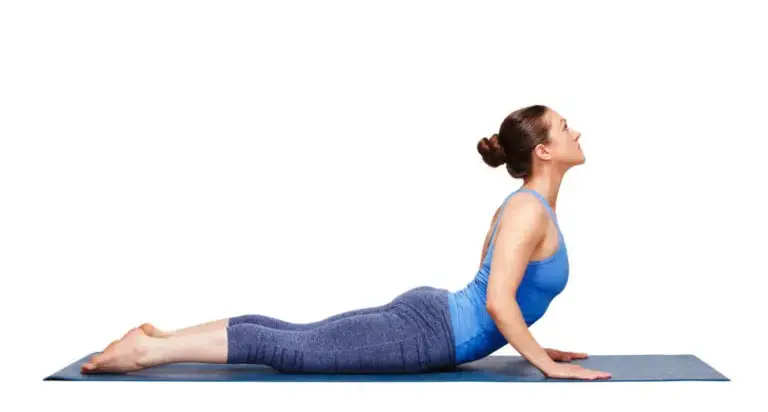
Serpent Pose (Cobra/Back Extension Variation)
This gentle extension exercise can help counter a forward-flexed posture and open the front of the trunk.
- Lie on your stomach on a mat or firm surface.
- Place hands under your shoulders.
- Gently lift your chest while keeping your pelvis grounded as comfortable.
- Keep your neck long and neutral (avoid cranking your head back).
- Lower with control.
Bird-Dog
Bird-dog targets deep core stability and coordination between the spine and pelvis—useful for improving upright control during walking.
- Start on hands and knees with hands under shoulders and knees under hips.
- Reach one arm forward while extending the opposite leg back to about hip height.
- Keep hips level and avoid twisting through the trunk.
- Pause, return to start, and switch sides.
Hamstring Flexibility and Soft Tissue Work
Standing Forward Fold (Modified)
This stretch can reduce hamstring tightness that contributes to pelvic positioning and low back strain. Modify it to protect your back.
- Stand with feet hip-width apart.
- Soften your knees slightly.
- Hinge at the hips and lower your torso only as far as is comfortable.
- Use a chair seat, yoga blocks, or a stack of books for support.
- Avoid forcing the stretch; aim for a gentle pull, not pain.
Foam Rolling The Hamstrings
Foam rolling can decrease the sensation of tightness and help some patients tolerate stretching and strengthening more comfortably.
- Sit with the roller under the back of one thigh.
- Support your weight with your hands behind you.
- Roll slowly along the hamstring muscle belly; avoid direct pressure behind the knee.
- Switch sides.
Massage Therapy
Massage may reduce muscle guarding and soreness that builds up when you’re compensating for posture changes. It does not correct alignment by itself, but it can be a helpful add-on while you rebuild strength and endurance.
Hip Strengthening to Support Upright Standing
Chair March
This simple movement helps activate hip flexors and improve hip control—often a useful starting point when walking feels unstable or tiring.
- Sit tall in a sturdy chair with feet flat.
- Keep your shoulders stacked over your hips.
- Lift one knee as if marching, then lower with control.
- Alternate sides.
Other Treatment Options If Home Exercise Isn’t Getting You There
If flat back symptoms are limiting your life, treatment usually starts conservatively. A focused physical therapy program often includes gait training, posture retraining, and a progressive strengthening plan—because doing the right exercises consistently (and in the right order) matters more than doing a long list of movements.
Depending on your situation, your clinician may also discuss medication options for symptom control and strategies to reduce flare-ups while you rebuild tolerance for standing and walking.
When conservative care is not effective—or when exam and imaging show significant malalignment—surgical options may be discussed. If surgery is being considered, it helps to understand the full spectrum of approaches on our spine surgery page, including cases that may be addressed with minimally invasive spine surgery techniques when appropriate.
When to See a Spine Specialist
Schedule an evaluation if you’re progressively leaning forward, your walking distance is shrinking, or standing upright is becoming difficult despite a well-performed exercise program. It’s also smart to get checked if you have a history of spine surgery, known deformity, or symptoms that don’t match what you see on a routine X-ray report.
A thorough visit typically includes a detailed history, a physical and neurological exam, and imaging when needed to evaluate overall alignment and rule out nerve compression or other drivers of pain. The goal is to identify what’s modifiable—and then match you with the least disruptive treatment plan that fits your anatomy and your life.
Flat Back Syndrome Evaluation in Los Angeles at Yashar Neurosurgery
At Yashar Neurosurgery, Parham Yashar, MD helps patients in Los Angeles understand why their posture is changing and what can realistically improve it. Care is stepwise: education, targeted nonsurgical treatment when appropriate, and surgical options when symptoms or alignment findings warrant it.
If you’re searching for the best minimally invasive spine surgeon in Los Angeles for a thoughtful evaluation of posture-related back pain and sagittal alignment concerns, our team can help you understand your options. Call (424) 209-2669 to schedule a consultation at 8436 W. 3rd Street, Suite 800, Los Angeles, CA 90048.